
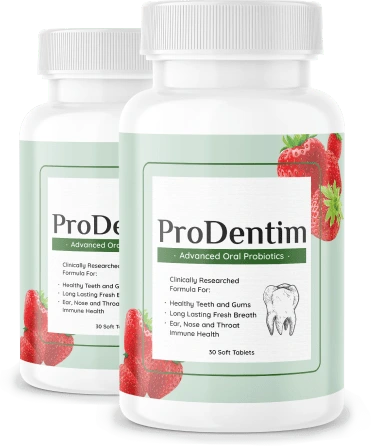

Understanding the ingredients in an oral health supplement matters more than reading a long list of scientific names on a sales page. ProDentim contains probiotic bacteria and other ingredients that its manufacturer promotes for oral health. However, the evidence behind an individual ingredient does not automatically prove that the finished supplement delivers the same benefits.
This article examines the listed ProDentim ingredients, explains their potential roles, and reviews the available scientific evidence. It also covers safety considerations, research limitations, and questions buyers should ask before purchasing the product.
The goal is straightforward: distinguish what the manufacturer claims, what researchers have studied, and what remains uncertain.
Product Specification Table
| Specification | Details |
| Product name | ProDentim |
| Product category | Oral health probiotic dietary supplement |
| Main ingredient types | Probiotic microorganisms and a prebiotic fiber |
| Listed probiotic strains | Lactobacillus paracasei, Lactobacillus reuteri, and Bifidobacterium lactis BL-04 |
| Other listed ingredients | Inulin, malic acid, tricalcium phosphate, and peppermint |
| Advertised probiotic quantity | 3.5 billion probiotic cultures, according to the manufacturer’s product information |
| Intended use | Supplementary support for oral health |
| Product format | Chewable tablet, according to the product website |
| Main limitation | The available ingredient research does not establish the effectiveness of the complete ProDentim formula |
What Is ProDentim and Why Do Its Ingredients Matter?
ProDentim is marketed as an oral health supplement that combines probiotics with other ingredients intended to support teeth, gums, and the balance of microorganisms in the mouth.
Probiotics are live microorganisms that may provide health benefits when people consume them in adequate amounts. Their effects depend on the particular microorganism, the dose, the delivery method, and the health outcome researchers measure.
That last point matters. Two probiotic products can contain bacteria from the same species but produce different results because they use different strains or formulations.
The mouth contains a complex community of microorganisms. Many contribute to normal oral ecology, while changes in that community can contribute to problems such as tooth decay, gum disease, and bad breath.
Researchers have investigated whether certain probiotics can influence this environment. Some studies report improvements in selected outcomes, but results vary across strains, populations, and study designs. A systematic review published in 2023 also highlighted the limitations of the evidence supporting probiotics for dental health.
This makes ingredient analysis useful, but it also sets a limit on what we can conclude. An ingredient with promising research does not automatically make a commercial supplement clinically proven.
For buyers, the important questions are whether ProDentim identifies its ingredients clearly, whether the relevant strains have been studied, and whether clinical trials have tested the finished product itself.
ProDentim Ingredients List: What Does the Label Say?
The manufacturer’s product information lists three main probiotic strains alongside a proprietary blend of four additional ingredients. These include a prebiotic fiber, a fruit-related acid, a mineral compound, and peppermint.
Here is what each ingredient does in the formula and what buyers should understand about the claims.
| Ingredient | General role or proposed purpose |
| Lactobacillus paracasei | Probiotic bacteria studied for possible oral health applications |
| Lactobacillus reuteri | Probiotic bacteria investigated in periodontal research |
| Bifidobacterium lactis BL-04 | A named probiotic strain |
| Inulin | A prebiotic fiber that can support the growth of certain beneficial microorganisms |
| Malic acid | An organic acid found naturally in fruits |
| Tricalcium phosphate | A calcium-and-phosphate compound used in some oral care and other products |
| Peppermint | A botanical ingredient commonly used for flavor and freshness |
The manufacturer promotes these ingredients for oral microbiome balance, gum support, breath freshness, and tooth health. Those descriptions represent the product’s intended benefits, not proof that every claim applies to the finished supplement.
One detail deserves attention: some websites discuss additional probiotic strains, including Lactobacillus acidophilus, and BLIS K-12 or BLIS M-18. These names do not appear in the main ingredient list on the product page cited above. Check the exact package label before assuming that another website describes the same formula.
Lactobacillus Paracasei: Potential Role in Oral Health

Lactobacillus paracasei is a species of lactic acid bacteria found in various microbial environments, including some fermented foods. Researchers have investigated certain strains for their potential effects on oral microorganisms.
The proposed benefit involves microbial interactions. Some probiotic bacteria may compete with other microorganisms for nutrients or attachment sites. Others may produce substances that affect the surrounding microbial community.
However, probiotic effects depend on the strain. Research involving one strain of L. paracasei cannot establish the effectiveness of every strain belonging to that species.
Studies of oral probiotics have examined outcomes such as levels of bacteria associated with tooth decay and changes in dental caries risk. The findings provide scientific reasons to investigate selected strains, but they do not prove that ProDentim prevents cavities or treats gum disease.
What does this mean for ProDentim?
The inclusion of L. paracasei gives researchers a plausible ingredient to investigate. It does not, by itself, establish how well the commercial formula works, whether the bacteria remain viable throughout the product’s shelf life, or whether the quantity in each tablet produces a meaningful clinical benefit.
For readers comparing supplements, the specific strain identification and the quantity supplied matter more than the species name alone.
Lactobacillus Reuteri: What Does Research Suggest?

Lactobacillus reuteri, also known under the updated scientific name Limosilactobacillus reuteri, has received attention in research on periodontal health.
Periodontal disease affects the tissues that support the teeth. Depending on its severity, it can cause gum inflammation, damage to supporting tissues, and eventually tooth loss. Professional dental care remains essential for diagnosing and treating these conditions.
Researchers have studied certain L. reuteri preparations as an addition to nonsurgical periodontal treatment, which can include professional cleaning below the gumline.
A systematic review published in Microorganisms in 2023 examined nine studies involving 287 patients. The authors reported that most included studies supported potential benefits when L. reuteri accompanied nonsurgical periodontal treatment. However, they also cautioned that differences between studies limited the strength of the conclusions
This evidence is relevant, but its scope matters.
The researchers evaluated specific probiotic preparations used alongside dental treatment. Their findings do not establish that ProDentim produces the same results or that a probiotic supplement can replace professional care.
The practical takeaway: L. reuteri is a reasonable ingredient to examine when assessing an oral probiotic, but its presence alone does not guarantee healthier gums.
Lactobacillus Acidophilus: Potential Benefits and Limitations
Lactobacillus acidophilus is a familiar probiotic species used in various food and supplement products. Researchers have examined selected strains for their possible effects on microbial balance and oral health.
Some probiotic research suggests that particular microorganisms may influence bacteria associated with dental caries or contribute to improvements in certain oral health measurements. Nevertheless, the results vary according to the strain, dosage, delivery method, and study population.
There is also an important product-specific issue.
The primary ingredient information cited for ProDentim does not list L. acidophilus among its three main probiotic strains. Therefore, readers should not assume that it forms part of the current formula simply because another review mentions it.
If the packaging lists L. acidophilus, check the complete strain designation and quantity. If it does not, research on this species should not be used to claim that ProDentim contains it or delivers its potential benefits.
This distinction is important for accurate product reviews. A scientifically interesting ingredient is not evidence of an ingredient’s presence in a particular supplement.
Bifidobacterium Lactis BL-04: What to Know

Bifidobacterium animalis subsp. lactis BL-04, often shortened to B. lactis BL-04 in commercial materials, is a named probiotic strain.
The ProDentim product information identifies BL-04 as one of its main probiotic ingredients. The manufacturer associates it with microbial balance and broader immune and respiratory support.
However, an important distinction separates general probiotic research from evidence for this specific use.
A probiotic strain may have research supporting one health outcome without having equally strong evidence for another. Evidence relating to digestive, respiratory, or immune outcomes does not automatically establish a benefit for teeth or gums.
For oral health, the relevant questions include whether researchers have tested BL-04 in the mouth, which outcomes they measured, and whether the studies used the same dose and delivery format as ProDentim.
The available product information does not, on its own, answer all these questions.
What should buyers conclude?
BL-04 is a specifically named probiotic strain, which is more informative than a label that lists only a broad bacterial species. Nevertheless, the presence of a named strain does not establish the clinical effectiveness of the finished product.
BLIS K-12 and BLIS M-18: Understanding These Probiotic Strains
BLIS K-12 and BLIS M-18 are distinct strains of Streptococcus salivarius. Researchers have investigated these oral bacteria for possible effects on the microbial environment of the mouth.
The two strains have attracted attention for different proposed oral health applications. K-12 has been studied particularly in relation to the throat and upper respiratory tract, including certain questions about oral microbial balance. M-18 has been investigated in connection with oral health outcomes, including dental plaque and tooth decay-related measures.
Research on these strains does not mean that all probiotics produce the same results. Nor does it establish that a product containing different bacterial strains delivers the same effects.
Most importantly, the primary ProDentim ingredient information cited in this article does not list BLIS K-12 or BLIS M-18 among its main strains.
Readers may encounter these names on other websites discussing oral probiotics. Before treating them as ProDentim ingredients, compare the claims with the label on the actual product.
This is a useful example of why strain-level accuracy matters. A review should describe the formula that the manufacturer lists, not combine ingredients from different products into one impressive-looking list.
Inulin: What Role Does This Prebiotic Fiber Play?
Inulin is a type of dietary fiber that can act as a prebiotic. Prebiotics help support the growth or activity of certain microorganisms, depending on the type of prebiotic and the environment in which it is used.
Probiotics and prebiotics serve different purposes. Probiotics supply live microorganisms, while prebiotics provide substances that selected microorganisms can use.
This explains why manufacturers sometimes combine the two in one supplement. The idea is to provide beneficial microorganisms alongside a substance that may support their activity.
ProDentim lists inulin as part of its additional ingredient blend. The manufacturer describes it as support for beneficial bacteria.
However, a general prebiotic effect does not prove that inulin improves every oral health outcome. Much of the established discussion around inulin concerns the digestive system, and the effects depend on the microorganisms and conditions involved.
The amount of inulin in ProDentim also matters. Without a clearly established quantity and relevant clinical evidence for the finished formula, it is difficult to determine how much practical benefit this ingredient contributes to oral health.
In short, inulin has a recognized role as a prebiotic fiber. Its inclusion in an oral supplement is scientifically plausible, but the exact benefit depends on the formulation and the evidence supporting its intended use.
Malic Acid, Peppermint, and Other Listed Ingredients
The non-probiotic ingredients deserve attention, too. They may contribute to the tablet’s formulation, flavor, or intended oral care benefits, but their roles differ from those of live probiotic microorganisms.
Malic acid
Malic acid occurs naturally in fruits, including apples and strawberries. It contributes to their characteristic tart taste.
The manufacturer associates malic acid with maintaining tooth whiteness. However, the presence of an ingredient associated with fruit does not establish that a supplement safely or effectively whitens teeth.
Concentration, contact time, formulation, and the condition of the tooth surface all influence how an ingredient behaves. Evidence for a specific dental treatment cannot automatically support a whitening claim for a chewable supplement.
Consumers seeking a noticeable change in tooth color should distinguish between removing surface stains and changing the underlying color of teeth. A dentist can explain which options suit their teeth and gums.
Tricalcium phosphate
Tricalcium phosphate is a compound containing calcium and phosphate, minerals associated with tooth structure.
Certain calcium-phosphate compounds have applications in dental materials and oral care products. However, their effectiveness depends on the specific compound, formulation, and method of application.
Its presence in ProDentim does not automatically prove that the supplement repairs enamel, reverses cavities, or strengthens teeth in a clinically meaningful way.
The manufacturer’s intended purpose should therefore remain separate from proven results for the complete product.
Peppermint
Peppermint is widely used as a flavoring ingredient in oral care products. Its familiar taste can create a sensation of freshness.
Fresh breath and the treatment of persistent bad breath are not the same thing. Peppermint flavor may make the mouth feel fresher without addressing the underlying cause of an unpleasant odor.
Persistent bad breath can relate to dental plaque, gum disease, dry mouth, oral infections, or other health conditions. A dental examination can help identify the cause.
It is also important not to treat peppermint’s inclusion as proof that the supplement reduces inflammation or treats an oral disease. Those claims require evidence for the relevant formulation and outcome.
Why the complete formula matters
Each of these ingredients has a different purpose. Inulin is a prebiotic fiber, malic acid is an organic acid, tricalcium phosphate is a mineral compound, and peppermint is a botanical ingredient.
A list of familiar ingredients may help explain a product’s formulation, but it cannot establish the effectiveness of the entire combination.
What Scientific Evidence Supports ProDentim’s Ingredients?
Scientific research provides a useful starting point for assessing oral probiotics. The key is to distinguish research on probiotics as a broad category from research on individual strains and research on the finished commercial product.
A systematic review of clinical trials published in 2023 examined probiotic interventions for oral health. It included 24 clinical trials with 1,612 participants receiving probiotics or other mouth treatments. The authors reported favorable findings for certain measured outcomes, including changes in Streptococcus mutans, a bacterium associated with dental caries.
These findings are relevant, but they need careful interpretation.
A reduction in the measured level of a bacterium is not the same as proof that a product prevents cavities, stops gum disease, or prevents tooth loss. Researchers must measure the relevant clinical outcomes to establish those benefits.
Another review, published in 2023, examined the potential benefits of probiotics for oral health and concluded that the available evidence did not yet provide a solid basis for every proposed dental application. The authors called for more research into the long-term effects of probiotics in the oral environment.
Taken together, these studies support a balanced conclusion: selected probiotics may offer benefits for certain oral health outcomes, but the results are not uniform across all strains or products.
What the evidence can and cannot tell us
| Evidence type | What it can establish | What it cannot establish alone |
| Laboratory research | Possible biological mechanisms | Benefits in people using the supplement |
| Research on an individual strain | Potential effects of that strain under studied conditions | Effectiveness of every product containing a related strain |
| Clinical trials of another probiotic product | Results for the tested product and participants | Identical results from ProDentim |
| Clinical trials of ProDentim itself | Potential benefits and risks under the tested conditions | Guaranteed results for every user |
The most persuasive evidence for ProDentim would come from well-designed human trials that test the finished formula, disclose the dose and methods, use appropriate comparison groups, and measure clinically meaningful outcomes.
When such evidence is not available or cannot be verified, a responsible review should say so rather than filling the gap with marketing claims.
Are the Ingredients Proven to Work Together in ProDentim?
Not simply because each ingredient has a proposed role.
Combining ingredients can make scientific sense. For example, researchers may investigate whether a prebiotic supports particular probiotic microorganisms or whether a formulation helps maintain their viability.
But researchers must test the combination to establish whether it produces the expected result. Ingredients can behave differently when combined, and a successful result from one formulation does not guarantee success in another.
For ProDentim, three questions are particularly important.
First, does the finished tablet contain the listed microorganisms in the stated quantities? A reliable assessment requires accurate labeling and appropriate quality controls.
Second, do the microorganisms remain viable through the product’s shelf life and under the recommended storage conditions? The presence of probiotic bacteria at manufacture does not automatically establish their viability when a consumer takes the product.
Third, does the finished formula produce meaningful improvements in oral health when people use it as directed? That question requires suitable clinical evidence.
The manufacturer’s ingredient descriptions provide information about the intended formulation. They do not, by themselves, answer all three questions.
It would therefore be inaccurate to claim that ProDentim’s ingredients have been proven to work together simply because some individual ingredients or related strains have appeared in scientific studies.
ProDentim Ingredients: Potential Side Effects and Safety Considerations
Probiotics have a history of use in foods and supplements, and many healthy people tolerate them well. Nevertheless, safety depends on the individual, the microorganisms involved, the formulation, and the person’s medical circumstances.
The U.S. National Center for Complementary and Integrative Health explains that research into probiotic safety has limitations. It also notes that the risk of harmful effects may be greater for people who are seriously ill or have compromised immune systems. Read the NIH’s probiotic safety guidance.
Potential considerations include the following.
Digestive discomfort: Some probiotic supplements can cause temporary digestive symptoms, such as gas. These effects are not guaranteed, and the frequency of side effects can differ between products.
Allergies and ingredient sensitivities: Consumers should examine the full label for ingredients they need to avoid. The main ingredient list alone may not disclose every excipient, flavoring agent, or manufacturing-related consideration.
Product quality: Buyers should check the seal, expiry date, storage instructions, and full ingredient declaration. They should also purchase from a seller they can verify.
Uncertain product-specific safety data: General research on probiotic safety does not establish that every formulation has undergone extensive safety testing. A claim that a product has no side effects would require stronger evidence than a general statement about probiotics.
Dental concerns: A probiotic supplement should not replace fluoride toothpaste, appropriate interdental cleaning, routine dental examinations, or professional treatment. The ingredient list does not establish that the product prevents or treats dental disease.
A consumer who develops an unexpected reaction after taking a supplement should stop using it and seek appropriate medical advice, particularly if symptoms are severe.
Who Should Check With a Healthcare Professional Before Using ProDentim?
Although many healthy adults tolerate probiotic products, some people should seek professional advice before adding an oral probiotic supplement to their routine.
People with weakened immune systems or serious underlying illnesses should discuss probiotic use with a healthcare professional. The NIH’s probiotic safety guidance identifies these groups as having a higher risk of potentially harmful effects.
People receiving complex medical treatment should also check whether the supplement suits their circumstances. This is particularly important when a clinician has advised them to avoid certain supplements or when they have questions about interactions with their treatment.
Anyone with a known allergy or sensitivity to an ingredient should review the complete product label before use. Do not assume that a supplement is suitable simply because its main ingredients sound natural.
Pregnant or breastfeeding individuals should ask a healthcare professional whether the specific product is appropriate for them, particularly when product-specific safety evidence is limited.
Finally, people with bleeding gums, persistent bad breath, tooth pain, swelling, or loose teeth should not rely on ProDentim as a substitute for dental assessment. These symptoms may require treatment, and delaying care can allow a dental problem to worsen.
The sensible approach is to assess the product against your health needs rather than assuming that a supplement is suitable for everyone.
Frequently Asked Questions About ProDentim Ingredients
1. What are the main ProDentim ingredients?
The manufacturer’s product information lists Lactobacillus paracasei, Lactobacillus reuteri, and Bifidobacterium lactis BL-04 as its main probiotic strains. It also lists inulin, malic acid, tricalcium phosphate, and peppermint. Check the packaging for the complete current ingredient declaration.
2. Does ProDentim contain 3.5 billion probiotics?
The manufacturer advertises 3.5 billion probiotic cultures in its product information. Consumers should check the actual label for the quantity per serving, how the manufacturer expresses the count, and any relevant viability information. The advertised number alone does not prove effectiveness.
3. Does ProDentim contain Lactobacillus acidophilus?
The main ingredient list cited in this article does not identify Lactobacillus acidophilus as one of its three principal probiotic strains. Check the exact product label before assuming that the ingredient is included.
4. Does ProDentim contain BLIS K-12 and BLIS M-18?
The main product ingredient information cited here does not list BLIS K-12 or BLIS M-18 among its principal strains. These are distinct Streptococcus salivarius strains discussed in oral probiotic research, but their presence in other products does not establish their presence in ProDentim.
5. Can ProDentim ingredients help with bad breath?
Certain probiotics have been investigated for their potential effects on bad breath, and peppermint can provide a sensation of freshness. However, evidence for individual ingredients or other formulations does not prove that ProDentim treats persistent halitosis. Persistent bad breath may require a dental examination.
6. Can ProDentim strengthen teeth or repair enamel?
The manufacturer associates some ingredients with tooth support. However, the ingredient list alone does not establish that ProDentim repairs enamel, reverses cavities, or strengthens teeth in a clinically meaningful way. Established dental care remains important for protecting tooth structure.
7. Are ProDentim ingredients scientifically studied?
Some probiotic species and strains used in oral health research have been investigated in laboratory studies and human clinical trials. Results vary, and studies of other formulations cannot automatically establish the effectiveness of ProDentim.
8. Does ProDentim have side effects?
The available general evidence indicates that some probiotic supplements can cause digestive discomfort, while serious adverse effects are a concern for certain high-risk individuals. The frequency and severity of side effects specifically associated with ProDentim cannot be established from general probiotic research alone.
9. Is ProDentim safe for daily use?
Suitability depends on the person’s health, the actual formulation, and the manufacturer’s directions. Follow the product label and consult a healthcare professional if you have an underlying condition, a weakened immune system, or concerns about an ingredient.
10. Can ProDentim replace toothpaste or dental treatment?
No. A dietary supplement should not replace fluoride toothpaste, regular brushing, interdental cleaning, dental examinations, or treatment recommended by a dentist. ProDentim’s ingredient list does not establish that it can prevent or treat every oral health problem.
Final Verdict: What Do We Know About the ProDentim Formula?
The ProDentim ingredients list includes probiotic microorganisms, a prebiotic fiber, and additional ingredients that the manufacturer associates with oral health support. Some of these ingredients have scientific research behind them, particularly in the broader field of probiotic research.
However, three distinctions matter when evaluating the product.
First, evidence for a probiotic species does not automatically establish the effects of every strain within that species. Strain identification and dosage matter.
Second, evidence for an individual ingredient does not prove that a commercial formula delivers the same benefits. The complete formulation, delivery method, product quality, and clinical results all influence the assessment.
Third, manufacturer claims should remain separate from independently established clinical outcomes. The available ingredient information does not, by itself, demonstrate that ProDentim prevents cavities, repairs enamel, treats gum disease, or eliminates persistent bad breath.
For potential buyers, the best approach is to examine the actual product label, review the evidence behind its specific strains, check the safety information, and consider whether the product suits their needs.
ProDentim may interest people researching oral probiotics, but it should not replace established dental care. A clear ingredient list is a useful starting point; reliable evidence about the finished product is what helps determine whether its advertised benefits hold up.